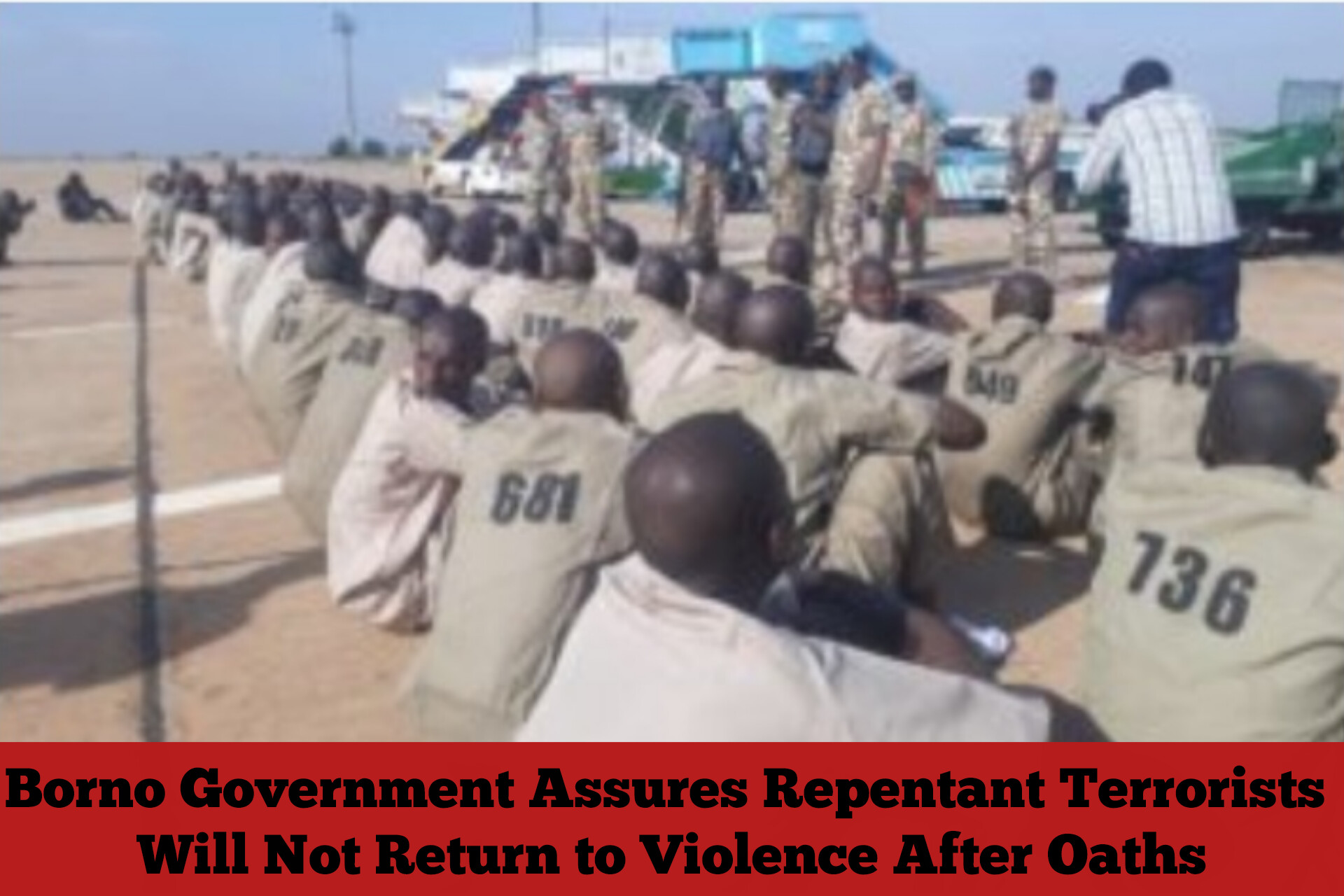
The Borno State Government has dismissed fears that repentant insurgents who have undergone rehabilitation and deradicalisation may relapse into terrorism, insisting that strict traditional and religious safeguards in the programme make such a return unlikely.
Officials say a central component of the state’s rehabilitation framework—commonly referred to as the “Borno Model”—is the swearing of an oath with the Holy Quran, which they describe as a powerful moral and spiritual commitment against returning to violence.
The State Commissioner for Women Affairs and Social Development, Zuwaira Gambo, disclosed this in an interview with NewsCentral Television, saying the oath carries serious spiritual consequences for those who break it.
“When they come to us through all the processes of the Borno model, the last thing they do is, they take an oath with the Quran. Once you swear by the Quran, you know the implication,” Gambo said.
She added that concerns about former fighters returning to the bush were often overstated, stressing that the process itself serves as a strong deterrent.
“People assume that they will go back to the bush; well, they may, but they are dead on arrival. So, it is not even about whether they have been certified or we trust them or not. The law of the jungle takes care of that,” she said.
Gambo, however, acknowledged that the programme faces significant operational challenges, particularly funding constraints.
“The challenge, of course, has to do with funding, because you bring a lot of people on board, but how are you going to feed them, how are you going to clothe and provide for them with necessary access to education,” she noted.
The comments come amid renewed national debate over Nigeria’s deradicalisation efforts under Operation Safe Corridor, following the reported graduation and planned reintegration of 744 former insurgents into society.
According to earlier reports, 597 of the beneficiaries were from Borno State, while others came from Adamawa, Yobe, Kano, and other parts of the country. The development triggered public concern over transparency, victim compensation, and security risks.
The President of the Nigerian Bar Association, Afam Osigwe, warned that while reintegration is not inherently wrong, the process must be transparent and sensitive to victims of violence.
“Reintegrating persons who may have unleashed violence or burned properties or committed other criminal activities into communities without addressing the hurt of the victims would appear as compensating perpetrators while overlooking the victims,” he said.
Similarly, the Country Director of Amnesty International Nigeria, Isa Sanusi, urged the government to improve transparency around the identities and roles of those being reintegrated.
“There are serious concerns that some of those called repentant sometimes go back to what they do. The government must be transparent about who they are and their level of involvement,” Sanusi said.
He added: “Tell the people who these people are, what kind of terrorism they were involved in, and whether they were informants or killers. These things have to be made very clear.”