“We need a permanent solution to this problem so that our people can return to their normal economic activities,”
ABUJA, Nigeria: The House of Representatives Committee on South-South Development Commission has called for urgent action to address prolonged gas seepage in Bille Community, Rivers State, and an oil spill affecting Odidi Federated Community in Delta State.
The committee chairman, Julius Pondi, made the call in Abuja during a stakeholders’ engagement on the Bille gas seepage and a legislative hearing into the Odidi oil spill.
Mr Pondi said the incidents had subjected residents of the oil-producing communities to prolonged environmental hazards, with serious consequences for livelihoods and wellbeing.
He said the Bille gas seepage had continued for about nine months despite engagements with relevant regulatory agencies.

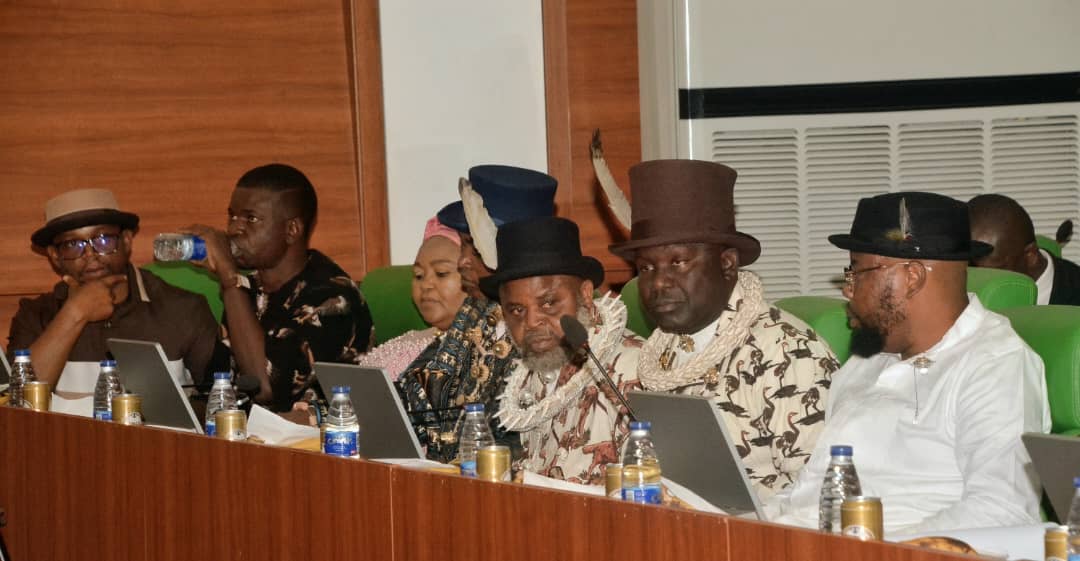
The Chairman House of Representatives Committee on South-South Development Commission, Julius Pondi (middle).
“We need a permanent solution to this problem so that our people can return to their normal economic activities,” Chief Egbila said
“Our concern was heightened after our engagement with the NUPRC and NOSDRA on July 30,” Mr Pondi said.
He said Bille, a predominantly fishing community, had suffered disruptions to fishing, household incomes, food security and education.
The committee, he added, would seek to establish the facts surrounding both incidents, assess the responses so far, identify obstacles and agree on “practical, measurable and time-bound actions”.
Gas seepage raises health and safety concerns
Presenting technical findings, a representative of the National Oil Spill Detection and Response Agency (NOSDRA), Dr Yusuf Rigasa, said investigations identified “multi-point subsurface gas bubbling” at several locations in Bille.
He said the affected locations included the premises of a government primary and secondary school.
According to Dr Rigasa, an air-quality assessment conducted by NOSDRA on 6 December 2025 across 19 stations recorded elevated levels of hydrogen sulphide, methane, volatile organic compounds and carbon dioxide.
He explained that hydrogen sulphide has a characteristic rotten-egg smell, while methane is highly flammable and potentially explosive.
The findings have heightened concerns over the safety of residents, particularly children and other people living or working around the affected locations.
Community seeks permanent solution
The Secretary-General of the Bille Kingdom Chiefs Council, Chief Luckyman Egbila, said the prolonged gas seepage had contaminated water sources, disrupted fishing activities and forced the relocation of pupils from a primary school.
He also complained that the community had not received copies of investigation reports produced by the relevant regulatory agencies.
“We need a permanent solution to this problem so that our people can return to their normal economic activities,” Chief Egbila said.
Odidi oil spill
The committee also said it would investigate an oil spill in Odidi Federated Community, Delta State, which Mr Pondi said had reportedly continued for more than five months.
He described the situations in Bille and Odidi as part of a wider environmental and developmental challenge confronting communities in Nigeria’s oil-producing South-South region.
Mr Pondi expressed hope that the engagements would produce concrete outcomes and provide a turning point for the affected communities.
By Jerry Jime