

Kathmandu began returning to normal on Saturday after days of violent anti-corruption protests that toppled Nepal’s government, left parliament in flames, and killed at least 51 people.
Troops who had flooded the capital since Wednesday scaled back their presence, while markets reopened, traffic resumed, and families once again thronged temples.
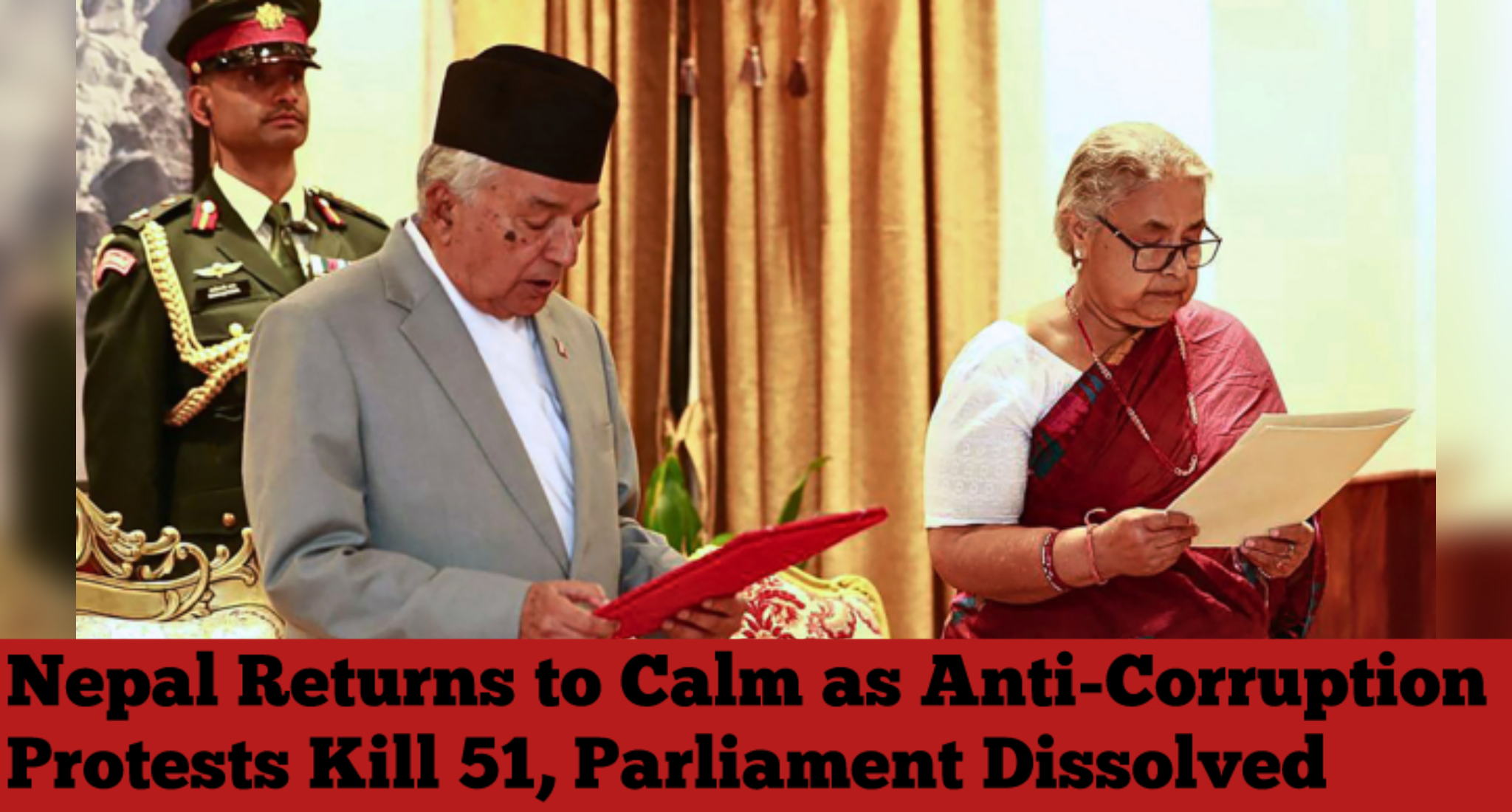
The unrest, the deadliest since Nepal’s civil war and abolition of the monarchy in 2008, prompted the swearing-in of Sushila Karki, a 73-year-old former chief justice, as interim prime minister on Friday evening.
Karki, who becomes Nepal’s first female head of government, has been tasked with restoring order, addressing corruption, and preparing the country for fresh elections set for March 5, 2026, after parliament was dissolved.
Her appointment followed tense negotiations between President Ram Chandra Paudel, army chief General Ashok Raj Sigdel, and leaders of the youth-led protest movement — known loosely as “Gen Z” — who had organized much of the uprising through the social app Discord.
For many Nepalis, Karki’s appointment represents both symbolic change and renewed hope.
“Nepal has got its first woman prime minister,” said Suraj Bhattarai, a 51-year-old social worker. “We think she will address Nepal’s fight against corruption and take good governance forward.”
The protests, which erupted Monday and spiraled into deadly clashes by Tuesday, reflected deep-rooted anger over corruption and economic stagnation.
According to the World Bank, one in five Nepalis aged 15–24 is unemployed, with GDP per capita at just $1,447.
“The main issue for young people is corruption,” said Durga Magar, 23, who works in a Kathmandu shop. “It doesn’t matter whether it is Gen Z or older politicians who tackle it — it just needs to stop.”
Despite the relative calm, daunting challenges remain. More than 12,500 prisoners escaped from jails during the chaos and are still on the run. Meanwhile, protesters’ calls for a corruption-free Nepal present a formidable test for the new government.
Indian Prime Minister Narendra Modi offered his “best wishes” to Karki, pledging New Delhi’s commitment to Nepal’s “peace, progress, and prosperity.”
For many Nepalis, Karki’s rise marks a clear break with the revolving door of ageing leaders like former prime minister KP Sharma Oli, who resigned Tuesday during his fourth stint in office.
“They were playing a game of musical chairs,” said Shikhar Bajracharya, a 32-year-old businessman. “There was no possibility for younger people to come into power.”
For now, however, relief has replaced tension on Kathmandu’s streets.
“We don’t know what will happen in the future,” Magar said. “But we are satisfied today and hope it will not remain as tense ahead.”


