
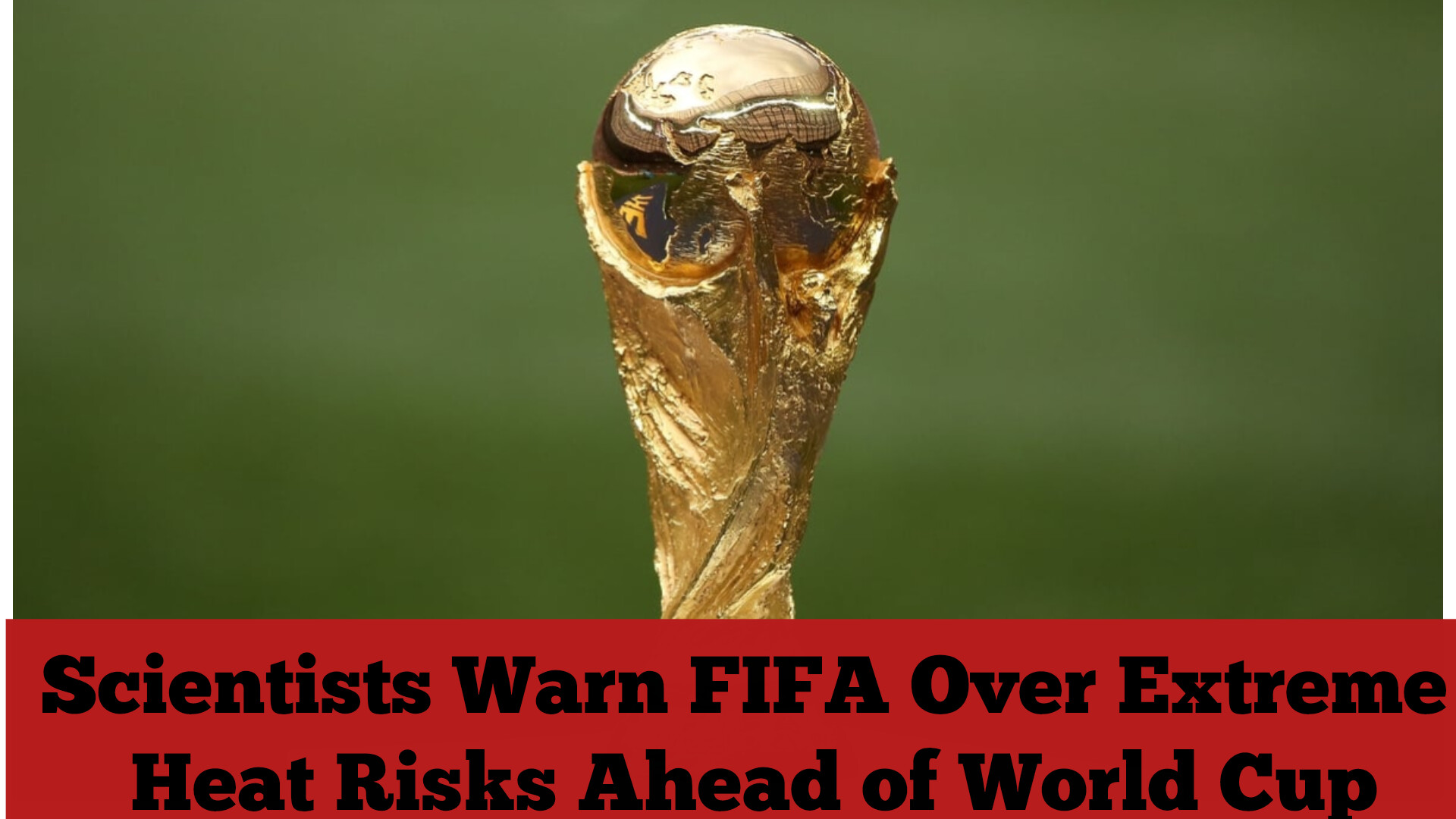
Scientists and climate experts have warned that players and fans could face dangerous heat conditions during the 2026 FIFA World Cup, urging football’s governing body to strengthen safety measures ahead of the tournament.
According to a report by BBC Sport, medical experts, climate researchers and sports scientists signed an open letter calling on FIFA to adopt stricter heat protection rules proposed by FIFPRO.
The experts warned that rising temperatures across the United States, Canada and Mexico — the three host nations for the 2026 World Cup — could expose athletes and spectators to severe heat stress during the summer tournament.
“Player safety is an immediate and urgent concern because things can go wrong very quickly when people overheat,” said climate campaigner Andrew Simms, who coordinated the letter.
“We’re worried that FIFA is playing recklessly with the health and safety of players,” he added.
The warning follows new analysis by the World Weather Attribution, which found that around one-quarter of World Cup matches could be played in temperatures above 26°C Wet Bulb Globe Temperature (WBGT), a key index used to measure heat stress.
Scientists also estimated that about five matches could exceed 28°C WBGT, conditions that FIFPRO considers unsafe for professional football.
Experts said the risk of extreme heat at the tournament has nearly doubled compared with the 1994 FIFA World Cup, which was also staged in North America.
Beyond extreme temperatures, researchers warned that thunderstorms and wildfire smoke could disrupt matches during the competition.
The group urged FIFA to revise its safety protocols before the tournament begins next summer.
In response, FIFA said it would implement a “tiered heat mitigation model” during the competition, with measures adjusted according to real-time weather conditions.
A FIFA spokesperson said the organisation would provide meteorological monitoring across host cities, using WBGT readings and heat indexes to guide decisions during matches.
FIFA added that kickoff schedules had been designed with climate conditions in mind, with efforts made to avoid games during the hottest periods of the day while assigning warmer fixtures to covered stadiums where possible.
The governing body also said it would continue working with medical experts and local authorities to ensure what it described as a “safe and resilient” tournament.
However, critics argue that climate change is making summer sporting events increasingly hazardous, raising broader concerns about the future of major tournaments in extreme weather condition.