
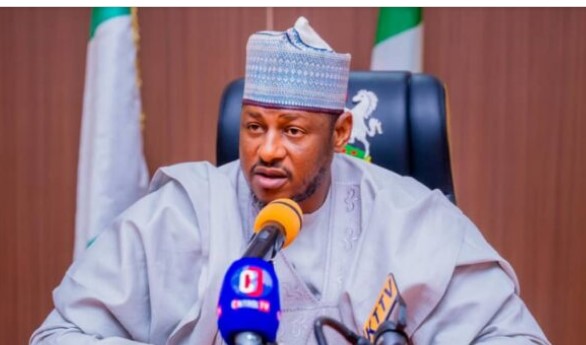
The Katsina State Government has announced a significant reduction in criminal activities across the state, revealing that banditry, kidnapping, and cattle rustling have declined by 70%, following sustained security efforts.
The announcement came during a high-level consultation on security and governance convened by Governor Dikko Umaru Radda to update citizens and stakeholders on the state’s progress in combating insecurity.
According to a statement from the Governor’s spokesperson, Ibrahim Mohammed, the improvement in security is the result of a comprehensive policing strategy and targeted operations that have disrupted criminal activities and neutralized several bandit enclaves.
The Commissioner for Internal Security and Home Affairs, Dr. Nasir Muazu, explained that the government’s community policing model, in combination with intermittent military offensives, has compelled several bandit leaders to approach community heads for peace negotiations.
According to Muazu, “Well-structured community policing, coupled with sustained attacks on bandit camps, has forced many criminal groups to reach out for dialogue.”
He stated that some of the bandit leaders who have indicated a willingness to lay down arms include Audu Lankai from Jibia, Abu Radde from Batsari, Ruga Kachalla from Safana, Ummaru Manore from Danmusa, Sani Muhidingi from Kurfi, and Wada from Musawa. He also noted that community leaders are actively working on peace accords in other areas such as Sabuwa (Risku), Faskari (Isa Kwashen Garwa and Adamu Alieru), and Kankara (Mustapha Babaro).
Dr. Muazu reported that recent security operations have led to the rescue of 143 kidnap victims across several volatile regions. Of those, 67 victims were rescued from Sayaya in Matazu Local Government Area, while 76 others were freed in Gidan Mantau, Malumfashi LGA.
He added that many bandit camps have been dismantled, forcing criminal elements to flee into forested areas near the Zamfara and Kaduna borders, significantly reducing their operational reach within Katsina State.
The improved security landscape has enabled the reopening of previously unsafe roads, including the Katsina-Jibia, Katsina-Batsari, Yantumaki-Danmusa, Danmusa-Musawa, Dutsinma-Mararrabar Kankara, Charanchi-Musawa, Safana-Batsari, Runka-Danmusa, and Jibia-Batsari routes. These roads, once considered high-risk, are now accessible again, supporting trade and movement across the state.
To maintain the momentum, Dr. Muazu said local communities have set up a consultation, monitoring, and evaluation committee that holds daily discussions on security issues and conducts monthly progress assessments.
“The community-driven monitoring system ensures that emerging threats are swiftly identified and addressed,” he added.