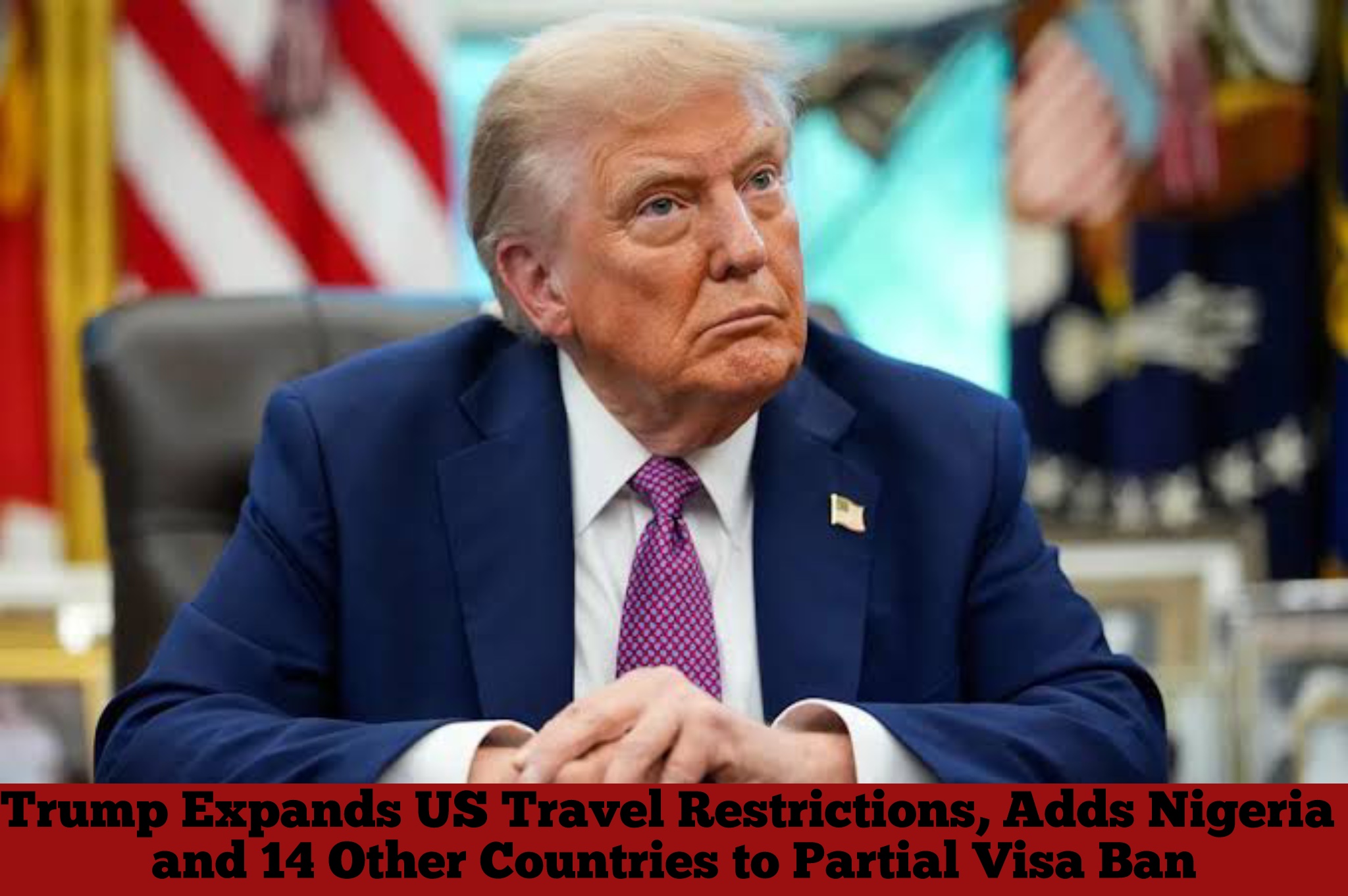
United States President Donald Trump has signed a new presidential proclamation expanding travel and visa restrictions on foreign nationals from several countries, citing national security, public safety, and deficiencies in screening and information-sharing systems.
In a fact sheet released by the White House, the proclamation extends full entry restrictions to nationals of five additional countries — Burkina Faso, Mali, Niger, South Sudan, and Syria — while imposing partial restrictions on 15 other countries, including Nigeria, Senegal, Ghana, Benin, Zambia, and Zimbabwe.
The directive builds on an earlier proclamation that already placed full restrictions on nationals from 12 countries, including Afghanistan, Iran, Libya, Somalia, Sudan, and Yemen, and expands limitations to individuals holding Palestinian Authority-issued travel documents.
According to the White House, the new measures are intended to “protect the security of the United States from national security and public safety threats.”
“It is the President’s duty to take action to ensure that those seeking to enter our country will not harm the American people,” the White House said in the statement.
Under the new proclamation, Nigeria is listed among countries subject to partial suspension affecting immigrant visas and non-immigrant categories such as B-1, B-2, F, M, and J visas. The US government cited security challenges linked to extremist activities in parts of the country, as well as concerns over visa overstay rates.
The White House noted that “radical Islamic terrorist groups such as Boko Haram and the Islamic State operate freely in certain areas,” creating challenges for effective screening and vetting.
However, the restrictions do not amount to a total ban. The proclamation provides exemptions for lawful permanent residents, existing visa holders, diplomats, athletes, and individuals whose entry is deemed to be in the national interest of the United States.
US authorities said the decision followed consultations with cabinet officials and a review of country-specific security data, including visa overstay rates, refusal to accept deported nationals, weak civil documentation systems, and the presence of terrorist networks.
The White House stated that some of the affected countries suffer from “widespread corruption, unreliable civil records, nonexistent birth registration systems, and refusal to share law-enforcement data,” making proper vetting difficult.
In a notable adjustment, the proclamation lifted non-immigrant visa restrictions on Turkmenistan, citing “significant progress” in identity management and cooperation with US authorities, although immigrant visa suspensions remain in place.
President Trump defended the move as consistent with his first-term travel policies, which were upheld by the US Supreme Court.
The Supreme Court had ruled that the travel restrictions were “squarely within the scope of Presidential authority” and based on “legitimate purposes,” including preventing entry of inadequately vetted individuals.
The White House said the restrictions are country-specific and designed to encourage cooperation, improve vetting systems, and safeguard US borders.