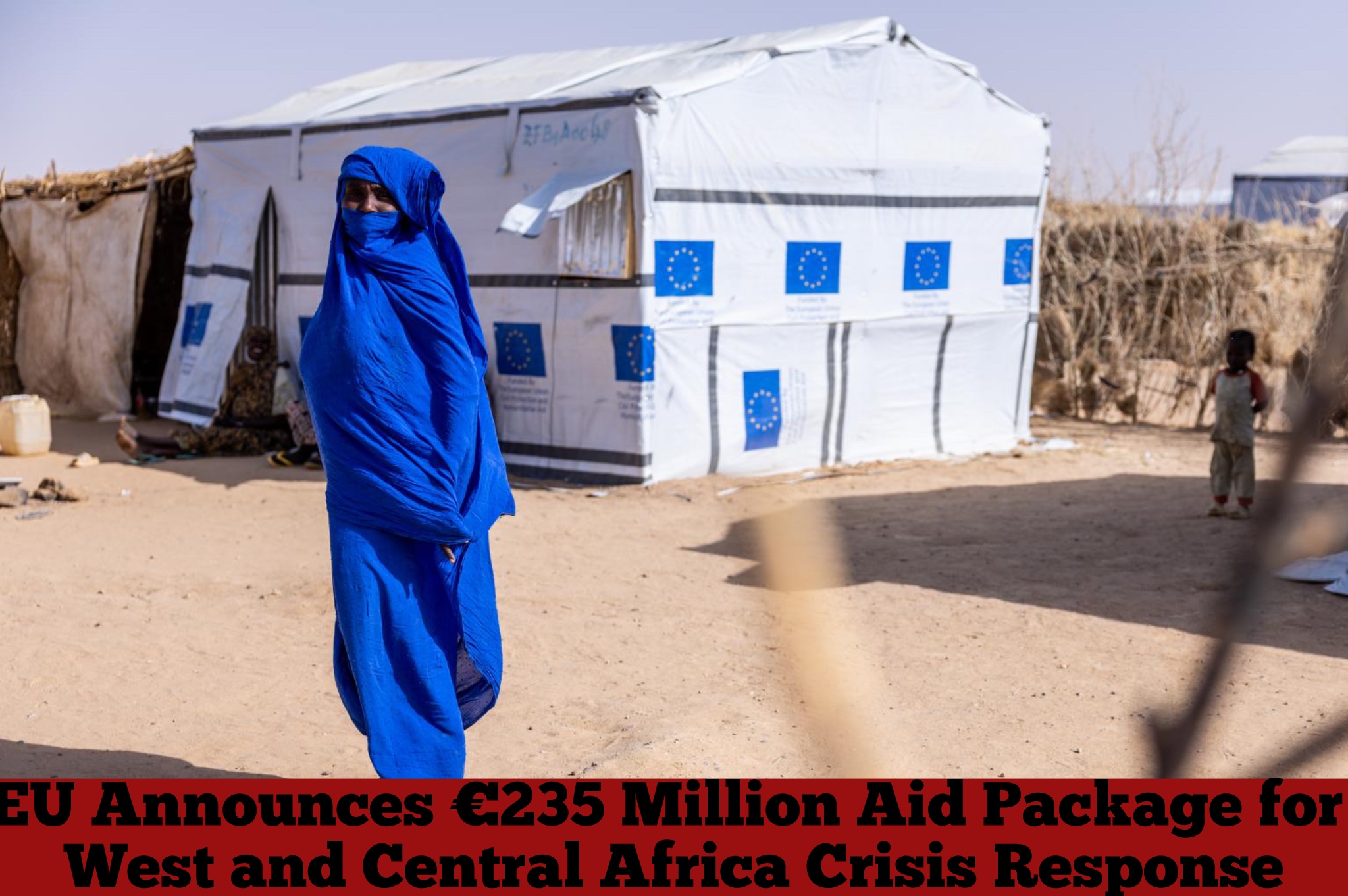
The European Commission has announced a €235 million humanitarian aid package to support vulnerable populations across West and Central Africa amid worsening conflicts, food crises and climate-related challenges.
The funding will provide critical assistance to millions affected by displacement, insecurity and economic hardship, including host communities and populations in hard-to-reach areas.
This is contained in a statement by the Press and Information Officer, EU delegation to Nigeria and ECOWAS, Mr. Modestus Chukwulaka.
According to the Commission, €75 million has been earmarked for the Central Sahel, while over €72 million will go to Chad. Nigeria is set to receive €33 million, with additional allocations of €22 million for the Central African Republic, €16.6 million for Cameroon, €4.8 million for Mauritania, and more than €6 million for coastal countries. A further €6.4 million will fund regional humanitarian projects.
European Commissioner for Equality, Preparedness and Crisis Management, Hadja Lahbib, said the region is grappling with multiple, overlapping crises that demand urgent international support.
“West and Central Africa is facing a storm of humanitarian crises, driven by conflict, poverty, hunger, instability, and climate shocks,” she said.
“For millions of people, humanitarian aid is not a choice. It is food on the table, clean water, medicine, shelter, and a chance for their children to learn again.”
Lahbib reaffirmed the European Union’s commitment to supporting affected populations.
“The European Union will always stand with people in crisis, as a reliable and principled humanitarian partner, to save lives, ease suffering, and bring hope where it is needed most,” she added.
The West and Central Africa region continues to face severe humanitarian challenges, largely driven by protracted conflicts, weak governance structures, population pressures and the growing impact of climate change.
The epicentres of the crises remain the Central Sahel and the Lake Chad Basin, where violence has triggered large-scale displacement both within and across borders.
Humanitarian conditions have also worsened due to spillover effects from the Sahel into coastal countries, as well as the ongoing crisis in Sudan, which is placing additional strain on neighbouring Chad.
In Nigeria, persistent insecurity in the North-West has compounded humanitarian needs, leaving thousands displaced and in need of urgent assistance.
The European Commission noted that the funding aims to address immediate needs such as food, healthcare, water, shelter and education, while supporting resilience in affected communities.
The aid package underscores the European Union’s broader humanitarian strategy in Africa, focusing on coordinated regional interventions to tackle interconnected crises.
Officials say the funding will be implemented through humanitarian partners to ensure timely delivery of life-saving assistance to the most vulnerable populations.