Nigeria’s gross gas production has increased to 7.63 billion standard cubic feet per day, up from about 6.83 billion cubic feet per day, according to the Presidency.
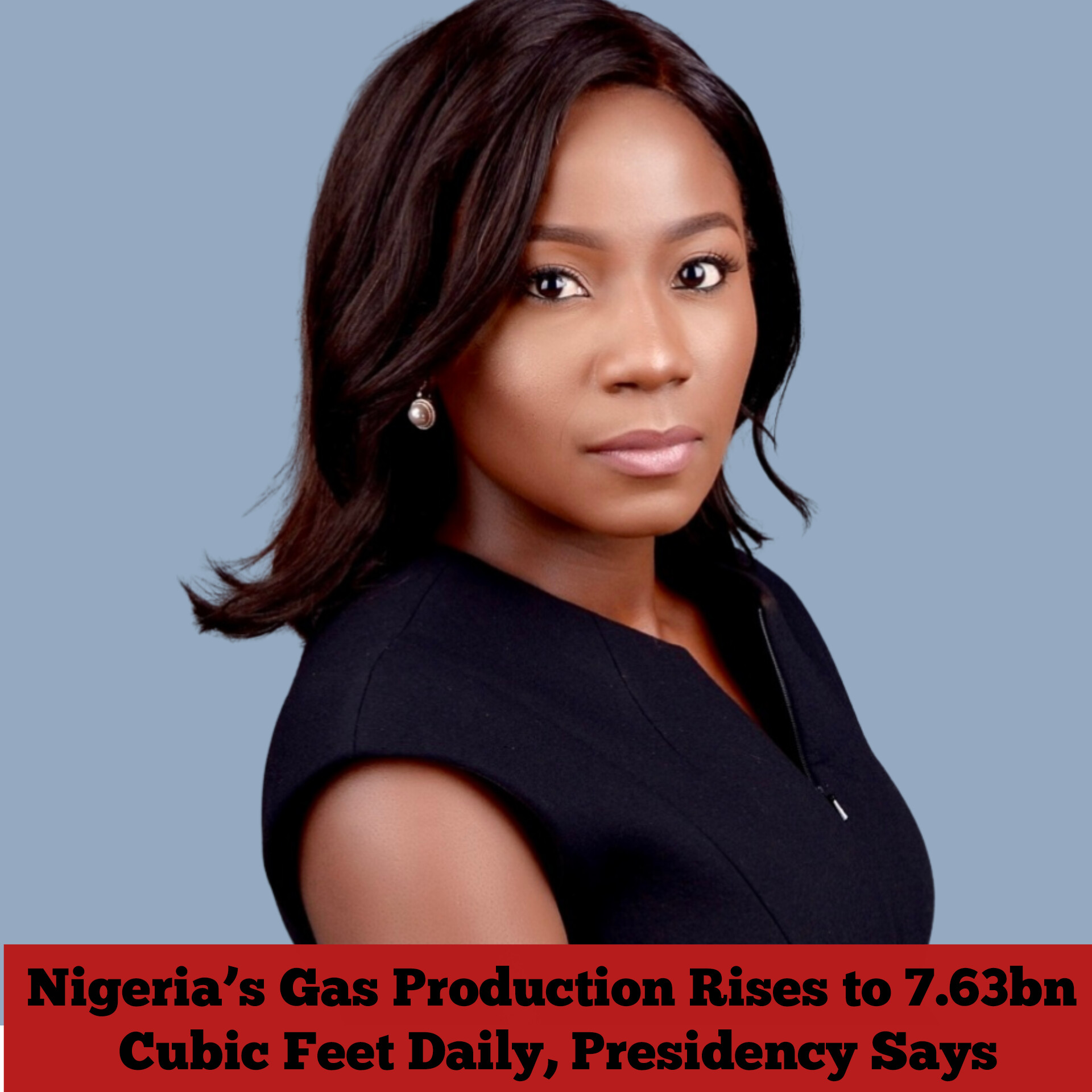
The Special Adviser to the President on Energy, Mrs Olu Verheijen, said the increase reflected recent policy reforms aimed at attracting investment and improving the operating environment in the oil and gas sector.
Speaking at the Nigerian-British Chamber of Commerce Energy Day in Lagos, Verheijen said Nigeria’s proven gas reserves had also risen to more than 215 trillion cubic feet.
She said presidential directives targeting deep-water operations, non-associated gas development and midstream infrastructure had contributed to the growth.
“Over $4bn in international oil company divestments were redirected into deep-water and integrated gas projects,” she said.
Verheijen added that reforms introduced by President Bola Tinubu’s administration had reduced the cost of doing business and shortened contracting timelines.
“Contracting that once took 36 months now takes around 14 months, while the government is driving toward a target of six months,” she said.
According to her, investor confidence has improved significantly, with Nigeria’s share of Africa’s upstream Final Investment Decisions rising from about four per cent three years ago to around 40 per cent over the past two years.
“The market responded. About $10bn was committed, with a visible pipeline of some $500bn ahead,” she said.
She said previously delayed projects, including Bonga North, Ubeta and HI gas developments, had resumed, while new non-associated gas projects were expected to support long-term liquefied natural gas exports.
“When Nigeria improves the rules of the game, capital returns to the field,” Verheijen said.
She said the government viewed gas not only as a transition fuel but also as a key driver of industrial development.
“The goal is not simply to produce more gas; it is to ensure Nigerian gas becomes Nigerian power, Nigerian products, Nigerian jobs and Nigerian exports,” she said.
“A nation does not grow wealthy by owning resources; it grows wealthy by converting them into value.”
Verheijen also said the government was working to restore financial stability to the gas-to-power value chain, which has long been affected by debt, weak payment systems and tariff challenges.
She said the Presidential Power Sector Debt Reduction Programme was designed to address these issues.
According to her, the Federal Executive Council approved a bond programme worth up to N4tn to settle verified debts owed to generation and gas companies.
“Generation companies have signed full and final settlement agreements worth about N2.28tn,” she said.
She added that the N501bn first series of the bond had been oversubscribed and payments to companies had begun, while a second tranche worth N729bn would complete the first phase.
Verheijen said the programme was “not a bailout” but a strategic intervention intended to restore liquidity and encourage investment in the sector.
The remarks were contained in a presentation made available to the News Agency of Nigeria after the event.