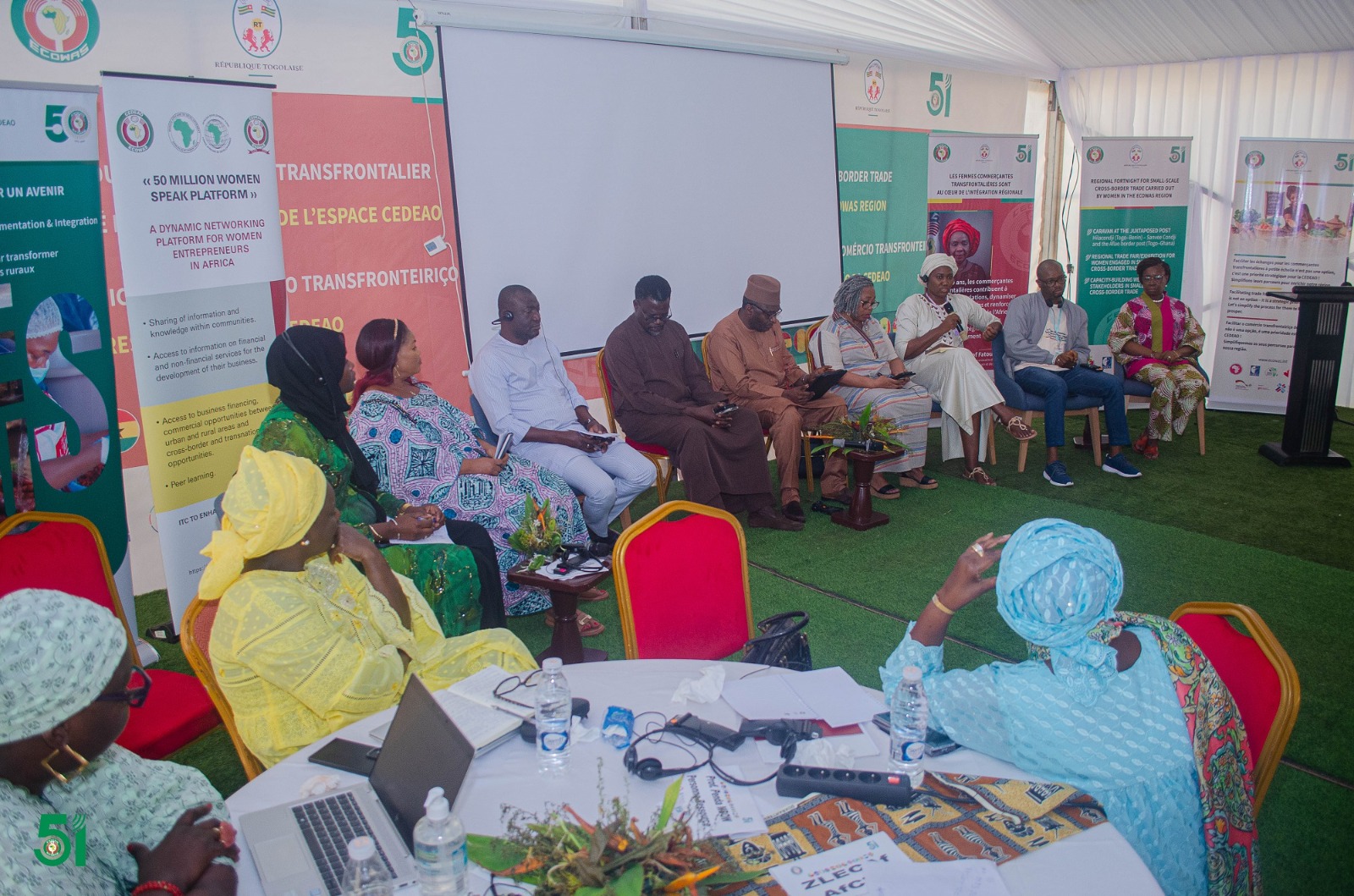
The Economic Community of West African States (ECOWAS) has concluded a regional capacity-building workshop for women cross-border traders and trade stakeholders, marking a significant step toward promoting inclusive trade and economic empowerment across West Africa.
The workshop, which brought together participants from 12 ECOWAS Member States, ended on Friday in Lomé, Togo, as part of the ECOWAS Regional Fortnight on Women in Small-Scale Cross-Border Trade held from 18 to 28 June 2026.
A major outcome of the gathering was the validation of the ECOWAS Gender and Trade Strategy 2026–2030 and its accompanying Action Plan. The strategic framework was developed using empirical data collected from five ECOWAS member countries and is aimed at addressing barriers faced by women engaged in cross-border trade.
Speaking at the closing ceremony, Acting Secretary General of the ECOWAS Commission, Mua’zu Umaru, reaffirmed the regional body’s commitment to ensuring that the strategy delivers tangible benefits for women traders across the region.
“ECOWAS is committed to translating the new Gender and Trade Strategy into concrete actions at border posts, ensuring that it does not remain merely a policy document without tangible impact,” Umaru said on behalf of Professor Fatou Sow Sarr, ECOWAS Commissioner for Human Development and Social Affairs.
The workshop formed part of ECOWAS’ broader efforts to strengthen the capacity of women traders, enhance regional trade integration and promote gender-responsive policies within the West African trading environment.
Participants engaged in discussions on trade facilitation, border management, economic inclusion and strategies to improve the participation of women in regional commerce. Stakeholders expressed optimism that the newly validated strategy would help remove structural barriers, improve access to opportunities and strengthen the resilience of women-led businesses across the region.
ECOWAS officials said the implementation of the strategy would focus on practical interventions at border communities and trade corridors, reinforcing the organisation’s commitment to gender equality, economic development and regional integration.