
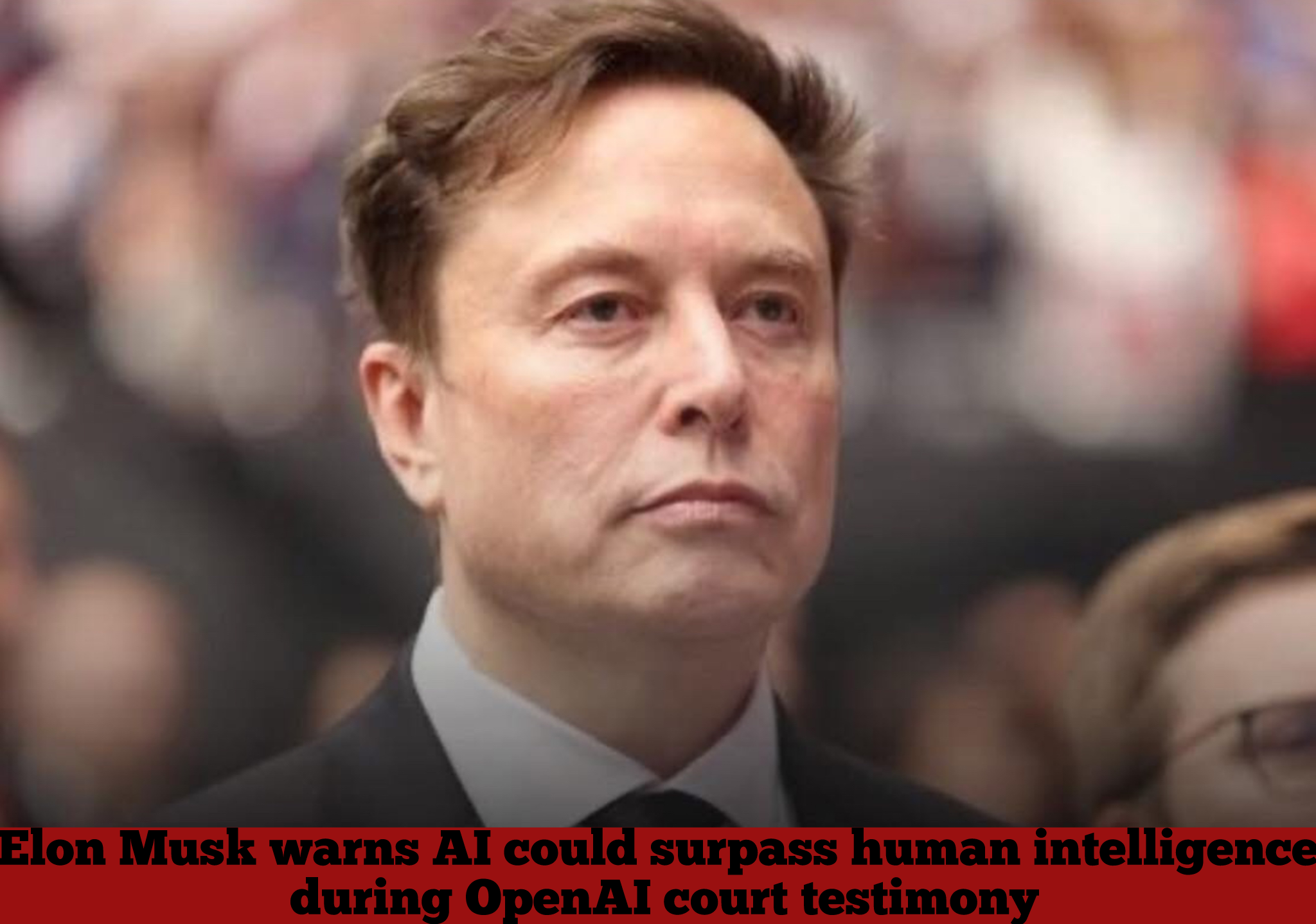
Tech billionaire Elon Musk has issued a stark warning about the future of artificial intelligence, telling a California courtroom that the rapidly evolving technology could become either humanity’s greatest achievement or its most dangerous threat.
Testifying in his legal dispute with OpenAI, the Tesla and SpaceX CEO cautioned against advancing AI without fully considering its risks. “It could kill us all,” Musk said, urging regulators and developers to proceed with caution.
Referencing popular culture, Musk warned against a dystopian future akin to The Terminator, while advocating for a more optimistic vision similar to Star Trek. He cited Gene Roddenberry as representing the kind of future humanity should strive toward.
Musk’s testimony comes amid his lawsuit against OpenAI, a company he co-founded in 2015. He alleges the organisation has strayed from its original non-profit mission of developing AI for the benefit of humanity, prioritising profit instead. OpenAI has denied these claims.
The billionaire also reflected on past conversations with Larry Page, recalling a 2015 discussion in which Page expressed optimism about AI creating a utopian future. Musk said he found that perspective dismissive of potential dangers, adding that Page once described him as a “specieist” for prioritising human survival over the advancement of digital life.
Reinforcing his concerns, Musk warned that artificial intelligence could soon surpass human intelligence, stressing that the moment is approaching rapidly and requires urgent oversight as major technology firms continue to push boundaries.
He also highlighted his brain-interface company, Neuralink, suggesting that integrating human cognition with AI could help maintain balance and ensure safer outcomes.
Despite the legal context, Musk’s remarks extended beyond the courtroom, outlining a future defined by both immense opportunity and significant risk, where humanity must carefully decide how far it allows artificial intelligence to evolve.