
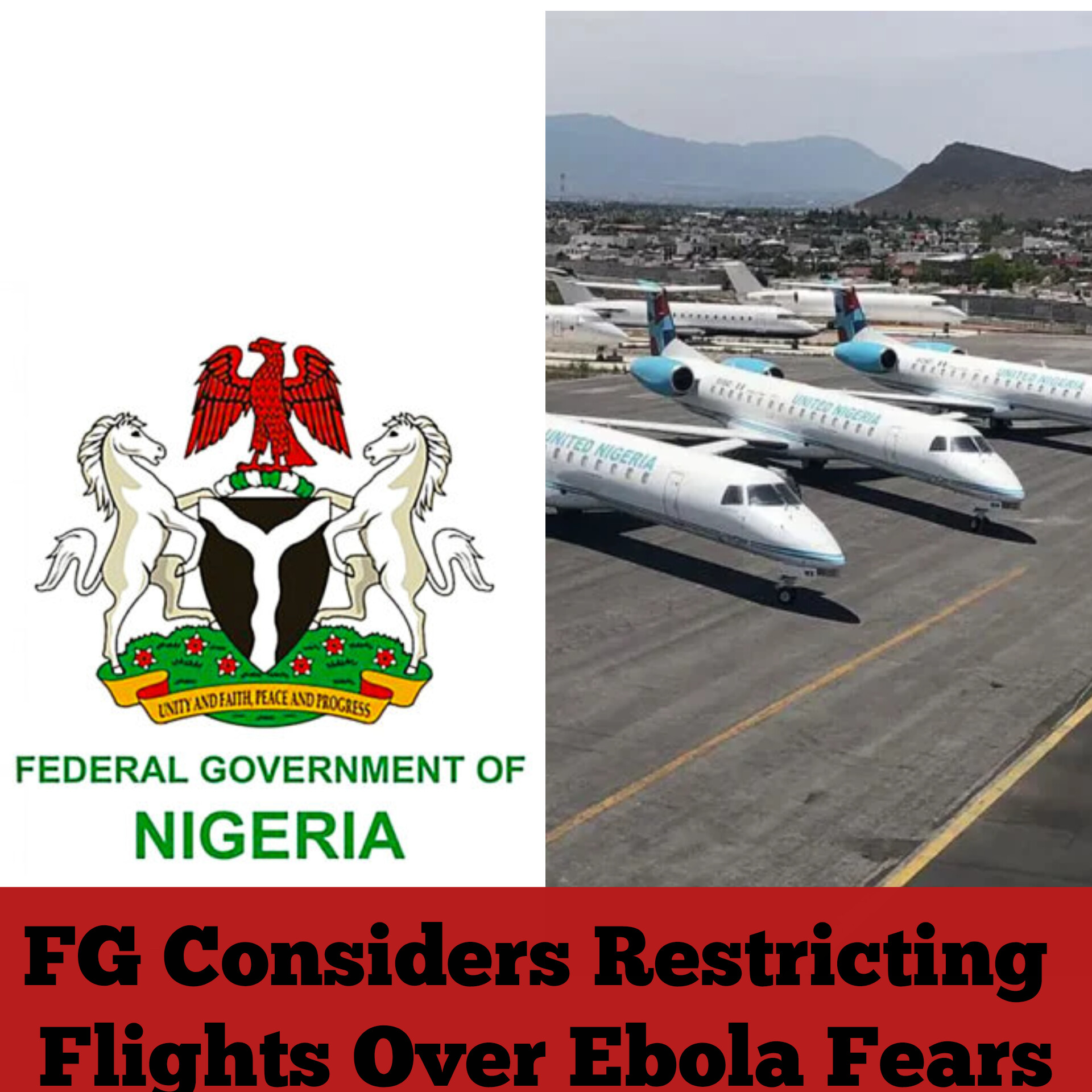
The Federal Government of Nigeria says it is considering restricting flights from countries affected by the Ebola virus as part of efforts to prevent a possible outbreak in the country.
The disclosure followed a high-level emergency preparedness meeting chaired by the Chief of Staff to the President, Femi Gbajabiamila, in Victoria Island, Lagos, where senior health and security officials reviewed Nigeria’s response framework against the deadly disease.
Officials at the meeting included the Director-General of the Nigeria Centre for Disease Control and Prevention (NCDC), Dr Jide Idris; Minister of Interior, Olubunmi Tunji-Ojo; and Lagos State Commissioner for Health, Akin Abayomi.
Speaking after the meeting, Mr Gbajabiamila said authorities were weighing stricter border measures, including possible flight restrictions from countries currently battling Ebola outbreaks.
“We have a health scare, which is Ebola, and we all know what happened the last time,” he said.
“The cases are getting worse internationally and worldwide, and we don’t want to leave anything to chance.”
He said the government was also considering isolating travellers who show symptoms linked to Ebola at airports and other entry points.
“There were three or four areas we looked at. We looked at the issue of possibility, as of now, of restricting flights from countries of interest,” he said.
“We looked at the possibilities of isolating passengers who may exhibit symptoms of Ebola.”
Mr Gbajabiamila added that authorities were considering the use of cargo terminals to process passengers arriving from affected regions while additional health protocols were being developed.
“Prevention is better than cure,” he said, adding that contingency plans were necessary in case infected passengers entered the country undetected.
He said President Bola Tinubu had been briefed on the Ebola situation in the Democratic Republic of Congo and Uganda, assuring Nigerians that the government would take “all necessary steps” to prevent any local outbreak.
The Minister of Interior, Olubunmi Tunji-Ojo, said surveillance at all points of entry would be intensified, with the Nigeria Immigration Service working closely with the NCDC to strengthen early detection and rapid response measures.
NCDC Director-General, Dr Jide Idris, warned that Ebola remained a severe viral disease with no approved cure or vaccine, stressing that vigilance and public health measures were critical.
“This particular virus has no treatment, no vaccines,” he said.
“So it’s the public health measures that need to be done — isolation, quick detection, public enlightenment, infection prevention, and control.”
Dr Idris said preparedness plans had already been activated across Nigeria’s 36 states and all ports of entry, while public awareness campaigns would be expanded.
“We are going to increase our communication again, and we’re talking to healthcare workers because they are vulnerable,” he added.
The World Health Organization (WHO) said it had recorded 10 confirmed and 223 suspected Ebola-related deaths in the Democratic Republic of Congo since the latest outbreak was declared in mid-May.
WHO Director-General Tedros Adhanom Ghebreyesus has warned that insecurity in eastern DR Congo is hampering efforts to contain the spread of the virus.