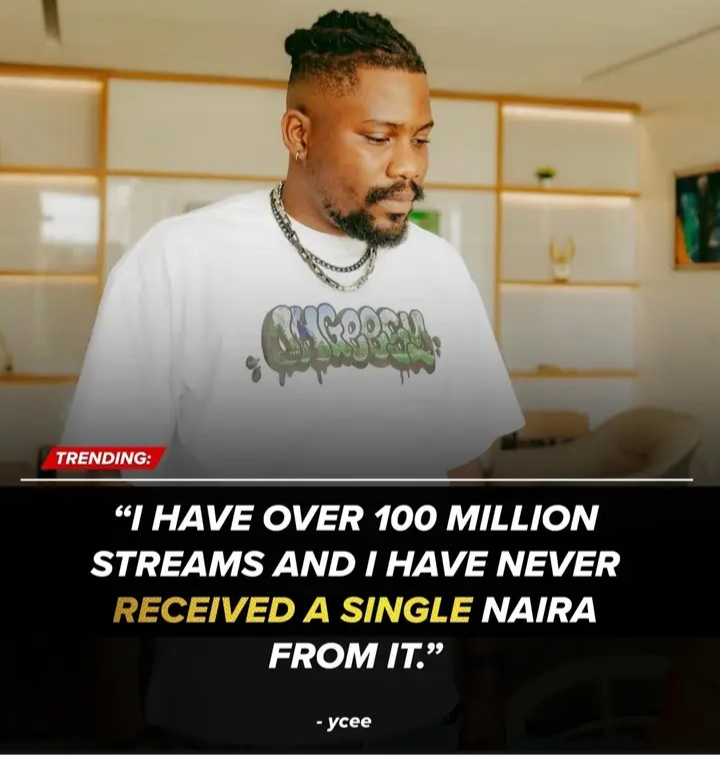
Nigerian rapper YCee has revealed that he never received royalty payments from music that generated more than 100 million streams, describing the situation as one of the most painful experiences of his career.
The rapper disclosed that despite the commercial success of his catalogue, he was unable to earn from the songs due to the terms of his agreement with a former record label.
According to YCee, he signed a 70-30 deal with the label, under which the company retained 70 per cent of revenue while the artiste received 30 per cent. However, he said he was repeatedly informed that the label had not yet recouped its investment, leaving him without any financial returns from the music’s performance.
The revelation has reignited discussions about record label contracts and royalty structures in the Nigerian music industry, with many artistes increasingly advocating for greater transparency in revenue sharing agreements.
Under a typical 70-30 record deal, the label takes the larger share of income from streaming platforms, physical sales and synchronization rights. In return, the company usually funds recording sessions, marketing campaigns, music videos and other promotional activities.
Industry experts note that an artiste’s share is often used to repay advances and investments made by the label before profits are distributed. As a result, some musicians may struggle to earn royalties even when their songs achieve significant commercial success.
YCee’s comments have sparked reactions across social media, with fans and industry stakeholders debating the fairness of traditional recording contracts and the need for artistes to fully understand the terms of agreements before signing.
The rapper’s experience adds to growing conversations within the entertainment industry about ownership rights, royalty payments and financial accountability between artistes and record labels.