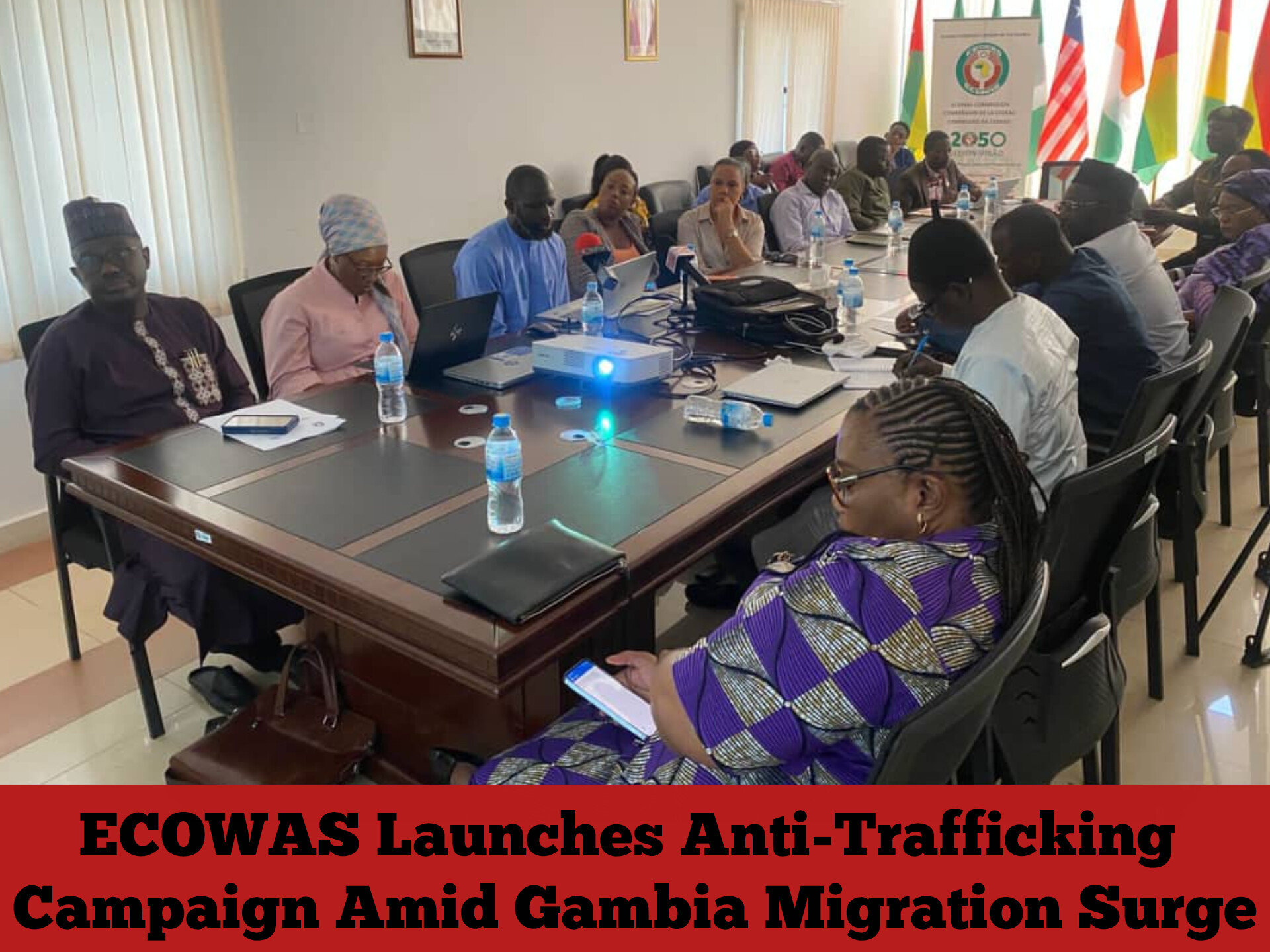
The ECOWAS Parliament has launched a regional campaign against irregular migration and modern slavery in The Gambia, warning that growing numbers of women and children are risking dangerous journeys across West Africa.
The week-long citizen engagement programme, themed “One Journey, Many Risks. Ask First, Move Safely,” brings together lawmakers, young people, returnees, civil society organisations and government agencies to promote safe migration and combat human trafficking.
Speaking at the opening ceremony in Banjul, ECOWAS Resident Representative Miatta French described irregular migration as a regional crisis requiring coordinated action from governments, communities and development partners.
She said the initiative reflects ECOWAS’ determination to protect vulnerable people from exploitation while addressing the factors pushing thousands of young West Africans to seek opportunities through unsafe migration routes.
“Regional cooperation, public awareness and stronger community engagement remain critical to preventing irregular migration and dismantling trafficking networks operating across West Africa,” she said.
Fresh figures presented by Assistant Superintendent of Immigration Alkali Jammeh showed that irregular migration increased sharply during the first half of 2026 despite tougher border enforcement.
According to him, 2,496 migrants were processed in the second quarter of the year, up from 1,509 in the first quarter, while interception cases rose from 22 to 68, suggesting that migrant smuggling networks are becoming more organized.
Mr Jammeh said The Gambia remains a source, transit and destination country along the Atlantic migration route, with smugglers taking advantage of porous borders and vulnerable coastal communities.
He also revealed that voluntary returns from Libya increased from 466 in the first quarter to 575 in the second quarter, while deportations from Europe rose by nearly 25%, with Germany and Italy accounting for almost half of those returned.
“The increase indicates intensified migration enforcement and rescue operations along the Central Mediterranean Route. It also suggests continued movement of Gambian migrants through Libya despite known protection risks,” he said.
The immigration official said 81.4% of intercepted migrants were men, while 18.6% were women. He added that authorities identified 164 children, representing 6.6% of all migrants intercepted, alongside pregnant women and suspected trafficking victims requiring protection and social support.
Most of those intercepted came from Senegal, The Gambia, Guinea and Mali, with nearly all originating from ECOWAS member states, he added.
The International Organization for Migration (IOM) also raised concerns over changing migration trends.
IOM official Jorr Jobe said more women and children are now using irregular migration routes, revealing that more than 440 women and children departed through The Gambia’s coastal routes between November and December.
She said women and children now account for between 10% and 15% of departures.
“Smugglers are shifting operations to more remote coastal communities, including Jinack Island, to evade security agencies,” she said.
Ms Jobe warned that overcrowded boats, deception by traffickers, family separation and exploitation continue to expose migrants to serious humanitarian dangers.
She called for stronger regional cooperation, improved protection systems and wider public awareness campaigns to reduce unsafe migration and safeguard vulnerable people.
The ECOWAS Parliament said recommendations from the engagements in The Gambia and Senegal would help shape regional policies aimed at strengthening prevention, victim protection and the reintegration of returning migrants across West Africa.