
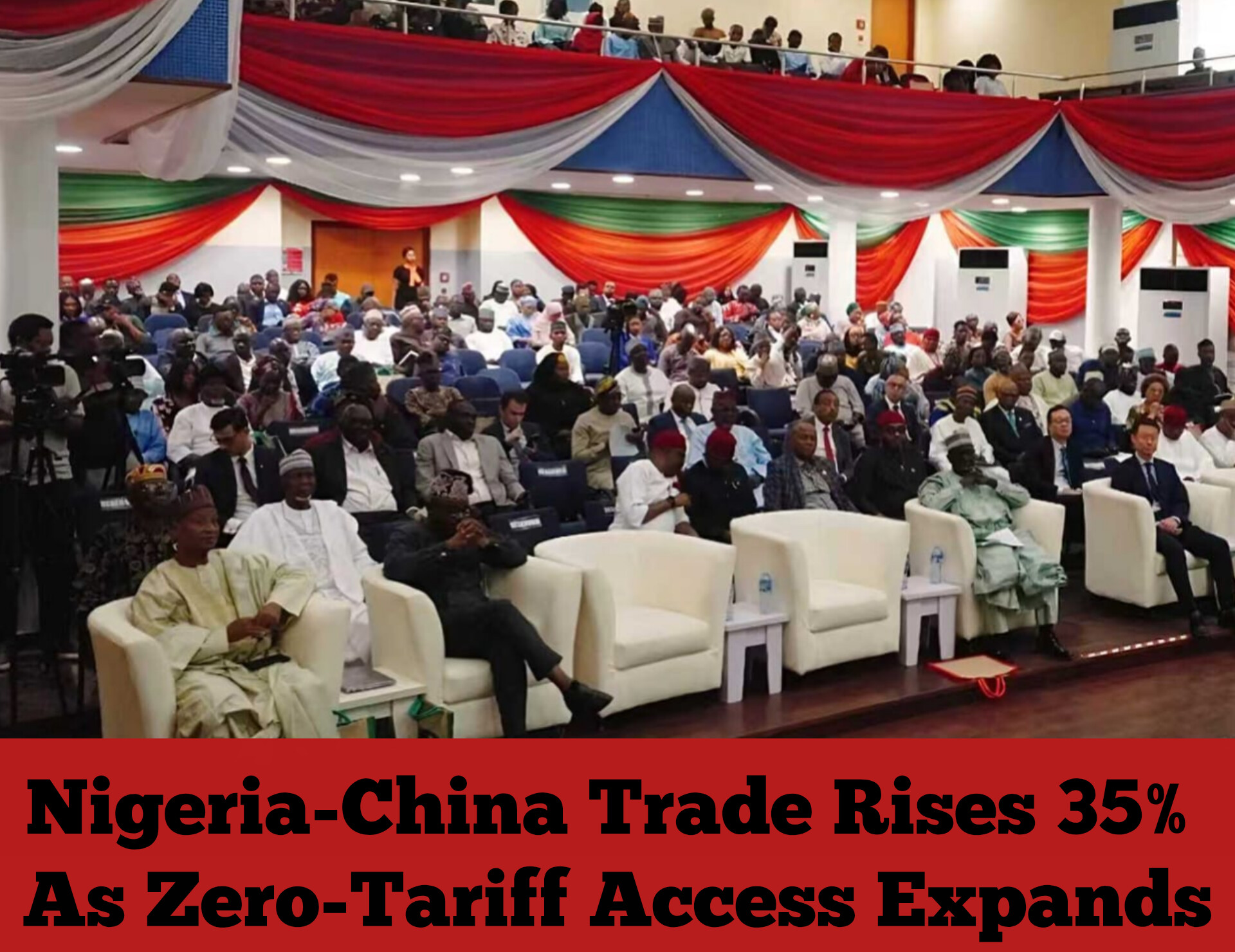
China-Nigeria bilateral trade reached $18 billion in the first half of 2026, representing a 35% increase from the same period last year, as Beijing’s zero-tariff policy for African exports begins to reshape trade relations.
Chinese Ambassador to Nigeria, Yu Dunhai, disclosed the figures in Abuja at a seminar on China’s zero-tariff measures and Africa’s economic structural transformation.
Mr Yu described the policy as a major opportunity for Nigeria to strengthen its industrial base, increase exports and develop local manufacturing.
He said Chinese imports from Nigeria rose by 80% to $2.3 billion, while total China-Africa trade reached a record $207 billion during the first six months of the year.
“China’s zero-tariff policy is a long-term strategic commitment rooted in mutual respect and shared benefits,” Mr Yu said.
The policy provides tariff-free access to the Chinese market for exports from 53 African countries. The ambassador said it had already helped increase African exports to China by about 6%, while reducing export costs and improving market access.
He urged African countries, including Nigeria, to use the opportunity to move beyond exporting raw commodities by investing in manufacturing and processing.
According to Mr Yu, Nigerian businesses are already taking advantage of the policy to invest in local processing and move up the value chain.
He said increased trade was also creating jobs in logistics, warehousing and transportation.
“The policy is empowering Nigeria’s industrial transformation and supporting local livelihoods,” he said.
China Seeks Stronger Economic Partnership
The ambassador called for a formal Agreement on Economic Partnership for Shared Development between China and African countries, including Nigeria, to provide long-term guarantees for trade and investment.
He said China was prepared to support Nigeria’s industrialisation through industrial parks, technology transfer, equipment supplies and training programmes.
Mr Yu also urged Nigerian exporters and small businesses to improve product quality and supply chain reliability to compete more effectively in the Chinese market.
He invited Nigerian businesses to participate in major Chinese trade platforms, including the China International Import Expo, Canton Fair and China-Africa Economic and Trade Expo.
The ambassador said the next phase of China-Nigeria relations should prioritise industrialisation, value addition and deeper economic integration.
He said the zero-tariff policy could help Nigeria turn improved access to the Chinese market into greater manufacturing capacity and sustainable economic growth.