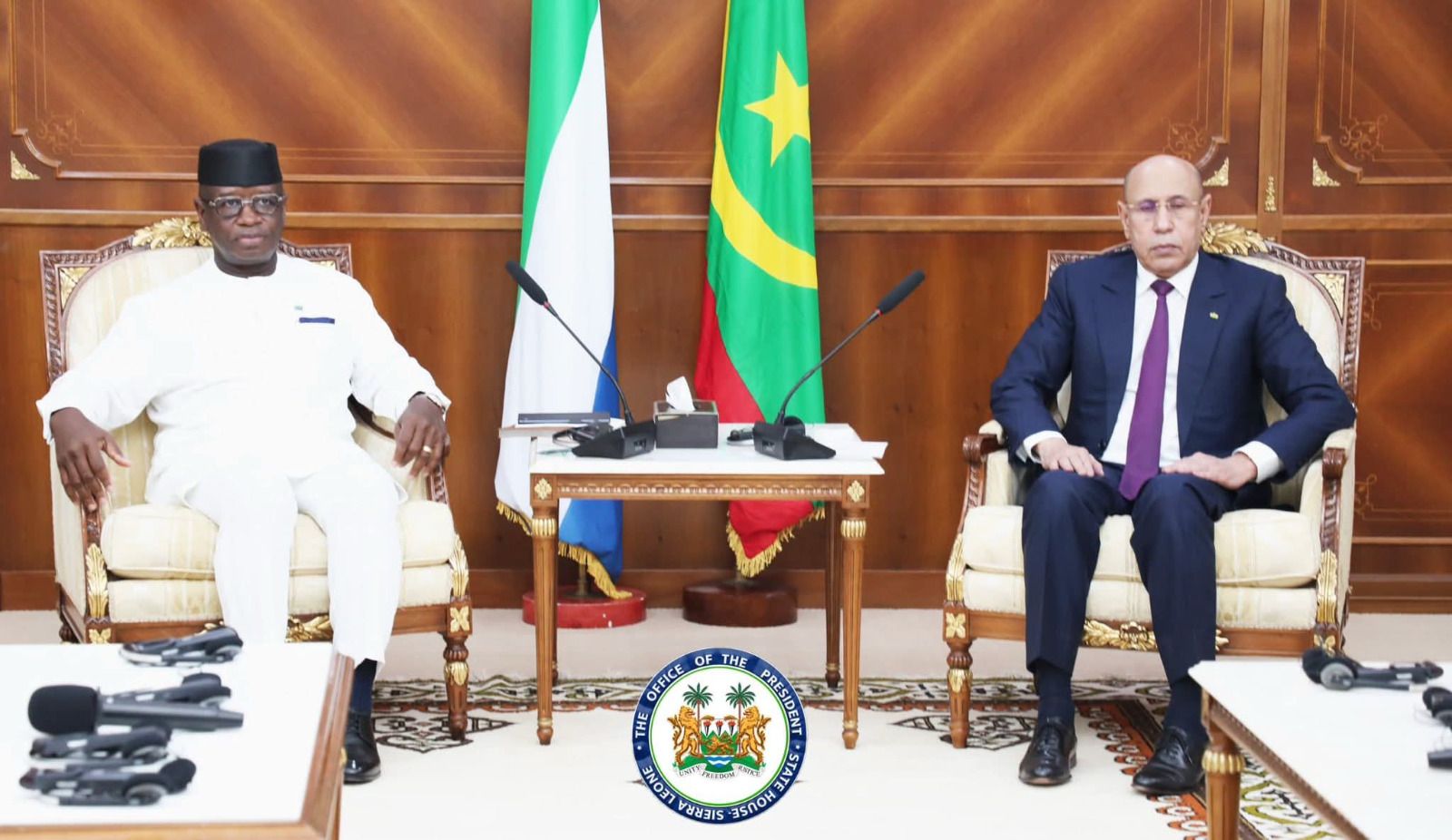
Sierra Leonean President and Chairman of the ECOWAS Authority, Julius Maada Bio, has held high-level talks with Mauritanian President Mohamed Ould Cheikh El Ghazouani on regional security, cooperation and development amid growing challenges across the Sahel and West Africa.
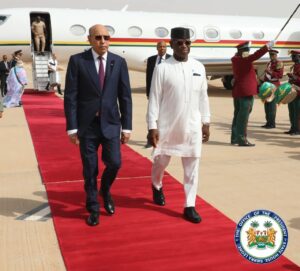
The meeting, held in Nouakchott from 15 to 16 June, focused on rising security concerns, including terrorism, violent extremism, organised crime, climate-related pressures, food insecurity and population displacement.
President Bio said strengthening regional solidarity and cooperation remains essential to addressing the complex challenges facing West Africa and the Sahel.
“Mauritania serves as a strategic bridge between the Maghreb, the Sahel and West Africa,” he said, adding that the country’s experience in combating terrorism and enhancing border security makes it “an indispensable partner in regional peace efforts.”
The ECOWAS chairman stressed the need for deeper engagement between Mauritania and the regional bloc, saying stronger cooperation would help tackle shared security threats, boost trade and investment, facilitate the movement of people and goods, and advance regional integration.
President Ghazouani expressed concern over the deteriorating security situation in the Sahel and reaffirmed Mauritania’s commitment to working closely with ECOWAS to confront emerging threats.
According to officials, the Mauritanian leader proposed a special regional summit aimed at developing coordinated responses to security challenges affecting both West Africa and the Sahel.
The discussions were attended by the President of the ECOWAS Commission, Dr Omar Alieu Touray, and former Speaker of the ECOWAS Parliament, Mohamed Sidi Tunis.
At the conclusion of the talks, both leaders reaffirmed their commitment to strengthening cooperation between Mauritania and ECOWAS and pledged to work together to promote peace, security, stability, regional integration and sustainable development across the region.