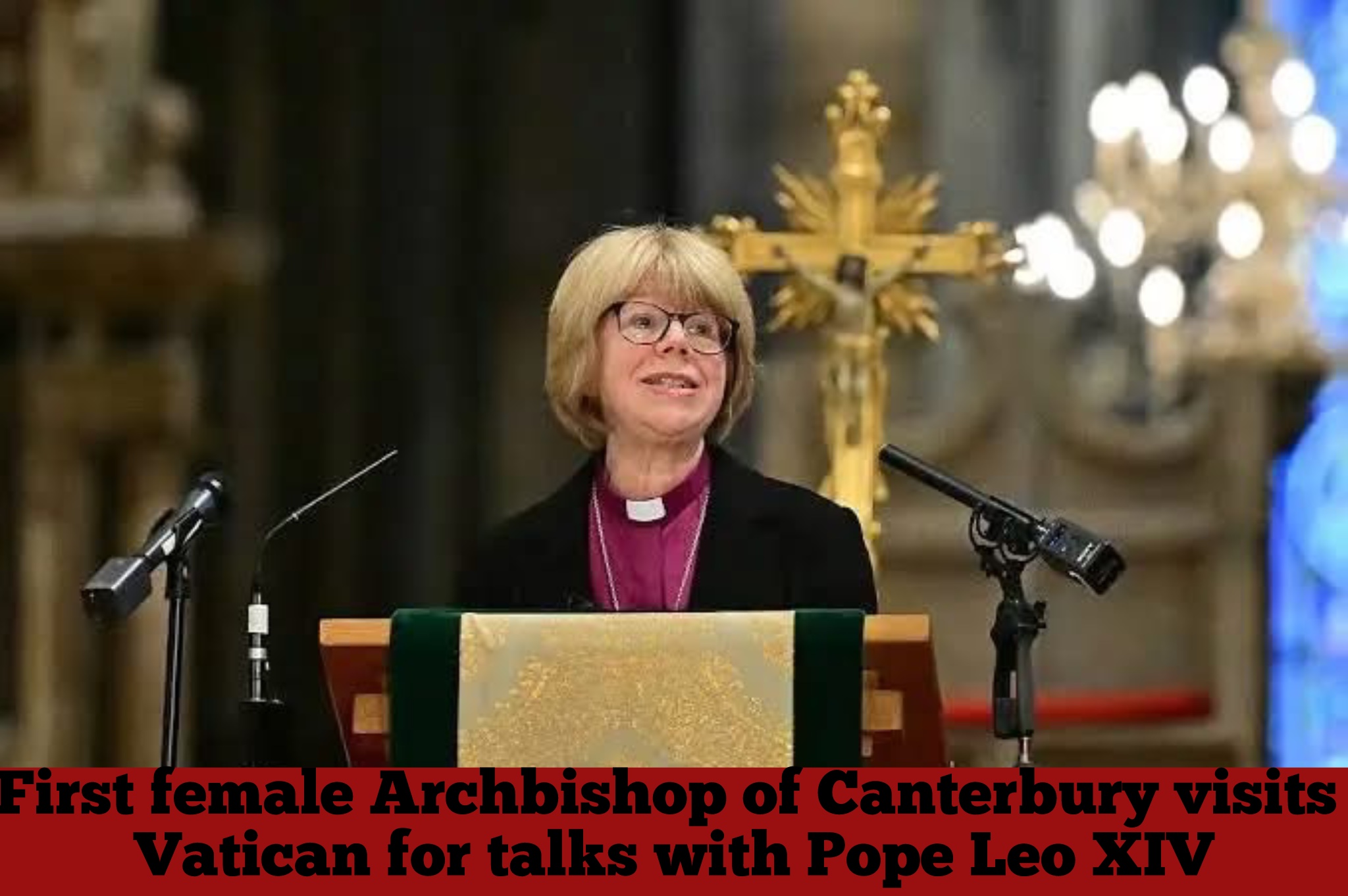
The newly enthroned Archbishop of Canterbury, Sarah Mullally, is set to visit the Vatican this weekend for an audience with Pope Leo XIV, marking a significant moment in Anglican–Catholic relations.
Mullally, the first woman to lead the Church of England, will meet the head of the world’s 1.4 billion Catholics during a four-day visit beginning Saturday. The trip is her first international engagement since her enthronement last month.
The meeting comes six decades after the landmark 1966 encounter between then Archbishop Michael Ramsey and Pope Paul VI, the first high-level dialogue since the Church of England separated from Rome in the 16th century under King Henry VIII.
While relations between the two churches have improved over time, differences remain, particularly regarding the ordination of women. Mullally’s leadership represents a historic shift for the Anglican Communion, which comprises about 85 million members worldwide.
The 63-year-old former nurse is married with two children and is among the growing number of female leaders in Anglicanism. Women were first appointed as Anglican bishops in the United States in 1989, while the Church of England approved female bishops in 2014. The issue, however, continues to generate debate within the global Anglican community.
In contrast, the Catholic Church has maintained its opposition to the ordination of women as priests and upholds clerical celibacy, with limited exceptions.
Mullally’s visit also follows a recent milestone in interfaith relations, as King Charles III became the first Supreme Governor of the Church of England to pray alongside a pope.
In a message marking Mullally’s enthronement, Pope Leo XIV expressed hope for a “reconciled, fraternal and united Christian community.” Bishop Anthony Ball described the upcoming meeting as an opportunity to strengthen both personal and institutional ties.
Both leaders face shared challenges, including global conflicts, migration, poverty, environmental concerns, and declining youth engagement in religious life. Additionally, both churches continue to grapple with the fallout from clerical abuse scandals and internal divisions between conservative and progressive factions.
Mullally’s appointment has drawn mixed reactions, particularly from conservative Anglican leaders in Africa, who have expressed concerns over her stance on issues such as same-sex marriage. However, observers say the Vatican meeting is expected to focus on dialogue and cooperation rather than doctrinal disputes.