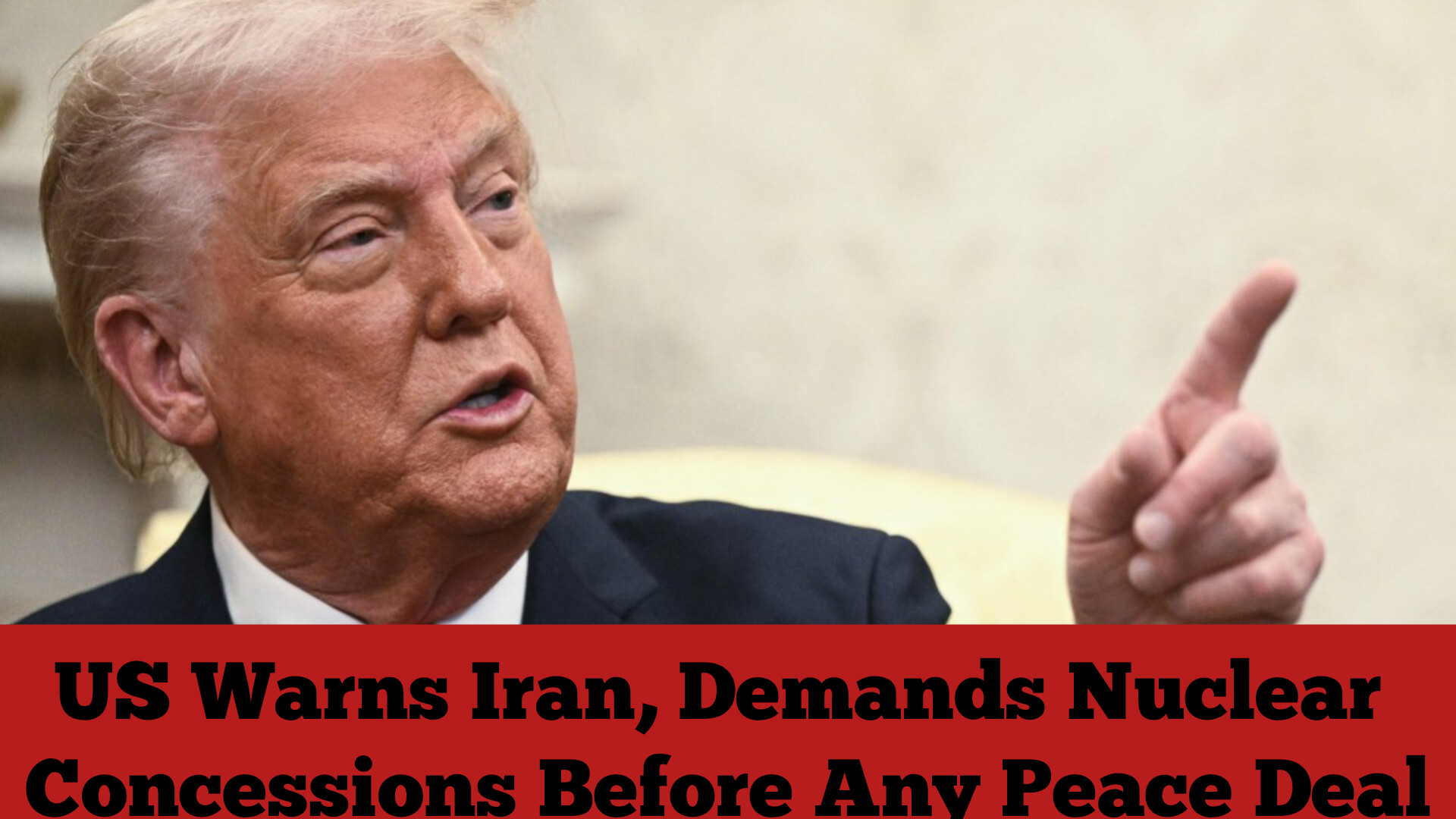
The United States has warned it is fully prepared to resume military action against Iran, as President Donald Trump insisted that any peace agreement must guarantee Tehran never acquires nuclear weapons.
The warning comes amid uncertainty over negotiations aimed at ending a conflict that has shaken the Middle East and rattled global markets.
Speaking at a major defence summit in Singapore on Saturday, US Defence Secretary Pete Hegseth said Washington retained the capability to restart military operations if necessary.
“Our ability to recommence if necessary is that we are more than capable,” Mr Hegseth said. “Our stockpiles are more than suited for that, both there and around the globe.”
His remarks echoed a statement from the US Central Command (CENTCOM), which said American forces remained “present and vigilant” across the region.
The White House had indicated that Mr Trump was close to deciding on a proposed agreement following weeks of fragile negotiations. However, no final decision was announced after a two-hour meeting in the White House Situation Room.
“President Trump will only make a deal that is good for America and satisfies his red lines,” a White House official said.
“Iran can never possess a nuclear weapon,” the official added.
Iranian officials pushed back against Washington’s demands, insisting that no final agreement had been reached.
Foreign Ministry spokesman Esmaeil Baqaei told Iranian state media that the Islamic Republic would not accept dictates from Washington.
“Iran said goodbye to the language of ‘must’ 47 years ago,” he said, while confirming that exchanges between the two sides were continuing.
Iranian President Masoud Pezeshkian also signalled openness to diplomacy, telling Qatar’s Emir that Tehran was prepared to pursue a “dignified framework” to end the conflict.
The negotiations have been complicated by recent US strikes on Iran’s southern port city of Bandar Abbas and subsequent Iranian retaliation.
In a social media post, Mr Trump outlined what he said were key elements of a possible agreement, including the reopening of the Strait of Hormuz, the removal of maritime mines and restrictions on Iran’s nuclear programme.
He also said the US and Iran would coordinate the removal and destruction of Iran’s enriched uranium stockpiles and that no financial transfers would occur “until further notice”.
However, Iran’s Fars news agency cited sources disputing several of those claims.
According to the report, Tehran is seeking the immediate release of $12bn in frozen Iranian assets and rejects suggestions that it has agreed to destroy its nuclear material.
The agency also said there was no provision in the draft agreement requiring toll-free access through the Strait of Hormuz.
While diplomatic efforts continue, clashes remain intense on another front of the conflict in Lebanon.
Israeli Prime Minister Benjamin Netanyahu said Israeli troops had advanced beyond a river roughly 30km north of the Lebanese border.
Meanwhile, Hezbollah said it had launched attacks on northern Israel and targeted Israeli forces advancing near the historic Beaufort fortress in southern Lebanon.
A ceasefire announced last month has largely failed to hold, with both Israel and Hezbollah accusing each other of repeated violations.
Lebanon was drawn into the conflict in March after Hezbollah launched rockets at Israel following the killing of Iran’s supreme leader in joint US-Israeli strikes. Israel responded with air strikes and a ground offensive..
Despite the fighting, Israeli and Lebanese military delegations have continued talks in Washington, with another round of negotiations expected next week.
For many in the region, uncertainty remains high.
“Both sides are speaking in a way that keeps their supporters satisfied. It’s not clear who is telling the truth,” Ali, a 49-year-old resident of northern Iran, said.